Marketing KPIs: The Numbers Small Businesses Should Track
A KPI is a number that tells you whether your marketing is working. Here are the marketing KPIs that matter for small businesses, how to calculate them and how to track them simply.
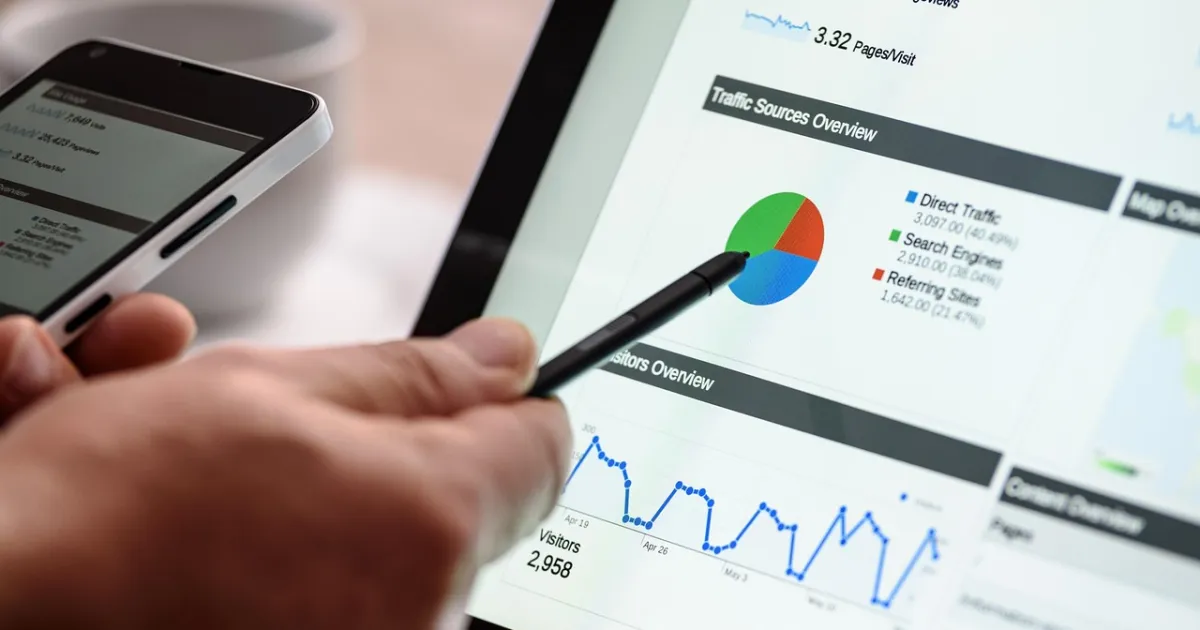
A KPI, or key performance indicator, is a number you track because it tells you whether you are moving towards a goal. Marketing produces endless statistics, from likes to page views. Most are not KPIs. A KPI should connect, directly or at one step removed, to enquiries, sales or keeping customers.
This guide covers the marketing KPIs most useful to small businesses and how to measure them without expensive software.
Start from your goals
Pick KPIs only after you have set goals, as described in our guide on how to write a marketing plan. If the goal is "40 new enquiries a month from the website", the KPI is website enquiries per month. Supporting numbers, such as visits from search, help explain why that KPI is rising or falling.
The core marketing KPIs
| KPI | What it tells you | How to calculate |
|---|---|---|
| Leads (enquiries) | How many potential customers got in touch | Count of calls, forms, emails and bookings |
| Leads by source | Which channels bring people | Ask "how did you hear about us?" and use tracked links |
| Conversion rate | How many enquiries become customers | New customers ÷ leads |
| Cost per lead | What each enquiry costs you | Marketing spend on a channel ÷ leads from it |
| Customer acquisition cost (CAC) | What it costs to win a new customer | Marketing spend ÷ new customers in the period |
| Average order value | Typical spend per sale | Revenue ÷ number of orders |
| Repeat purchase rate | How many customers come back | Customers who bought more than once ÷ all customers |
| Customer lifetime value (CLV) | What a customer is worth over time | Average order value × purchases per year × years as a customer (roughly) |
A worked example
An imaginary dog-training business spends £300 a month on local ads and printed leaflets. It gets 30 enquiries and 12 new customers.
- Cost per lead: £300 ÷ 30 = £10
- Conversion rate: 12 ÷ 30 = 40%
- Customer acquisition cost: £300 ÷ 12 = £25
If a typical customer books a £150 course and one in three comes back for a second course, the lifetime value is comfortably above £25. The marketing pays for itself, and the owner can spend more on the channels with the lowest cost per customer.
Channel KPIs that support the core numbers
- Search: impressions and clicks in Google Search Console; calls and direction requests in your Business Profile.
- Website: visits, and especially the share of visitors who enquire or buy.
- Email: click rate and sales from campaigns; see email marketing metrics.
- Social media: clicks, messages and enquiries rather than likes alone.
- Ads: cost per lead and cost per sale.
How to track without expensive tools
- A simple spreadsheet with one row per month and a column for each KPI.
- Ask every new customer how they found you and record it.
- Use tracked links (UTM tags) in emails, social posts and ads, so analytics can tell which campaign sent a visitor.
- Read the free reports in Search Console, Business Profile and your email platform once a month.
- Use unique codes for offers in different channels.
Vanity metrics to treat carefully
Followers, likes, impressions and page views are easy to grow and pleasant to watch, but they do not pay bills by themselves. Keep them as supporting signals, and always ask: did this bring more enquiries or customers?
Questions
What are the most important marketing KPIs for a small business?
Leads, leads by source, conversion rate, cost per lead or customer, and repeat purchase rate. Together they show whether marketing brings profitable customers.
How many KPIs should I track?
Three to five core KPIs is enough for most small businesses, with a few supporting channel numbers.
What is a good customer acquisition cost?
One that is comfortably lower than the profit a customer brings over time. Compare it with your customer lifetime value rather than with other businesses.
Sources
Read next

Marketing Campaign Strategy: How to Plan a Campaign That Works
A marketing campaign is a focused burst of activity with one goal and a deadline. Here is how to plan one step by step, with a timeline and…

What Is Market Research? A Plain Guide for Small Businesses
Market research means gathering information about customers, competitors and your market in an organised way before you decide. Here is wha…
How to Create a Digital Marketing Strategy in 7 Steps
A digital marketing strategy decides how you will use your website, search, email, social media and ads to reach customers. Here is how to …