Customer Journey Stages and Touchpoints Explained
The five customer journey stages are awareness, consideration, purchase, retention and advocacy. Here is what happens at each one and which touchpoints matter.
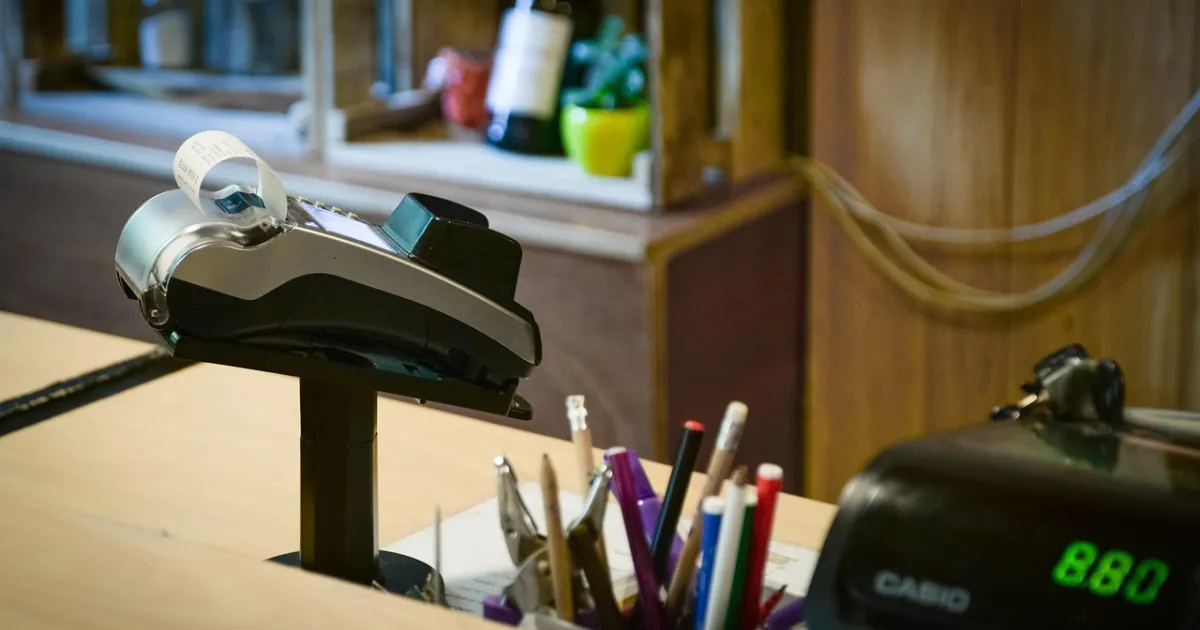
The customer journey stages, in the five-step version used by the Chartered Institute of Marketing, are awareness, consideration, purchase, retention and advocacy. They describe the path from first hearing of a business to recommending it to someone else. A touchpoint is any moment on that path where the customer meets the business: an advert, a search result, a phone call, an invoice, a review. Other models use different names and a different number of steps, but they all cover the same three stretches of time, which are before the purchase, the purchase itself and what comes after.
The five stages
The Institute set this version out in a 2022 article. The examples follow one made-up business, a two-partner accountancy practice that looks after sole traders.
Awareness
The customer learns that the business exists, through advertising, word of mouth or social media. A newly self-employed decorator hears the practice mentioned by another tradesperson, or sees its name on a sponsor board at the local football club.
Consideration
The customer has recognised a need and is weighing up whether this product or service is worth buying. The decorator reads the fees page, looks at reviews and compares the practice with an online bookkeeping app and with doing the return alone.
Purchase
The customer buys. For the practice this is a signed engagement letter and a first direct debit, and awkward paperwork at this point can lose people who had already decided.
Retention
The customer uses what they bought, often looking to the provider for guidance, and the provider has the chance to build loyalty. The decorator sends receipts, gets reminders and asks questions through the year. The practical side of this stage is covered in the guide to customer retention.
Advocacy
Satisfied customers recommend the business in reviews or by word of mouth. The Institute's article adds a caution: negative opinions shape this stage too.
Where the stage models come from
An early model that is still taught is AIDA: attention (or awareness), interest, desire, action. It is commonly attributed to the American advertising pioneer E. St. Elmo Lewis, and an early appearance of the acronym in print is a 1921 article by C. P. Russell in Printers' Ink. AIDA was meant to describe how a single advert should work and was later borrowed to describe the early part of the customer's route to a sale. A standard criticism is that it stops at the purchase and says nothing about satisfaction, repeat custom or referrals.
Marketing textbooks teach a second model, the consumer purchasing decision process. OpenStax's Principles of Marketing (2023) gives it five steps: need recognition, information search, evaluation of alternatives, purchase decision and post-purchase evaluation. The five-step structure is credited to the philosopher John Dewey, who set it out in How We Think in 1910 without applying it to buying.
A third strand changed the shape and kept the steps. A 2009 McKinsey article, "The consumer decision journey", is cited for the idea that the path is a loop: after the purchase the customer returns to the first step, and the experience feeds their awareness of the brand. Retention and advocacy in the five-stage list cover the same ground.
What counts as a touchpoint
A touchpoint is any instance where a customer interacts with a business's brand or image. One common way of sorting touchpoints is by who controls them:
- paid touchpoints, such as press, radio or television advertising;
- owned touchpoints, such as the website, brochures and sales conversations;
- earned touchpoints, such as test reports and customer recommendations.
Another is by timing: before the purchase (website, word of mouth, direct mail, advertising), during it (the shop, the sales call, the person serving) and after it (loyalty schemes, satisfaction surveys, warranty handling, maintenance reminders).
The first split carries the more useful lesson for a small business. Some touchpoints a customer relies on, reviews and a neighbour's opinion among them, are ones you cannot write yourself. You can only earn them at the earlier stages.
Touchpoints at each stage
The table sets the accountancy practice's touchpoints against the five stages. Swap in your own; the questions in the second column change very little from one trade to another.
| Stage | What the customer is asking | Typical touchpoints | What to check |
|---|---|---|---|
| Awareness | "Who does this round here?" | Search results, business profile, a client's recommendation, local advert | Is the name, trade and area the same everywhere it appears? |
| Consideration | "Are they right for someone like me, and what will it cost?" | Services and fees pages, reviews, first phone call, reply to an enquiry email | Can a visitor find a price or a price range without ringing? |
| Purchase | "What do I have to do to get started?" | Engagement letter, new-client form, payment set-up, welcome email | How many separate steps are there, and which one do people stall at? |
| Retention | "Am I being looked after?" | Deadline reminders, the yearly review call, invoices, answers to questions | How long does a client wait for a reply in the busy months? |
| Advocacy | "Would I put my name to this?" | Review request, referral thank-you, how a complaint was handled | Do you ask for a review, and at a moment when the client is pleased? |
The stages are not a straight line
Real customers skip steps and double back. The OpenStax textbook notes that low-stakes purchases, a loaf of bread for instance, may involve no information search at all. Loyal customers may skip the search and the comparison of alternatives altogether. A café regular does not "consider" where to buy a morning coffee.
The models themselves have been questioned. A 1999 review of more than 250 journal articles and books by Vakratsas and Ambler found little support for the idea that advertising works through a fixed sequence of steps. Treat the stages as a checklist of moments to look at, and not as a prediction of how any one customer will behave.
Doubt is part of the journey as well. After a purchase, buyers may wonder whether they chose well. The textbook term is cognitive dissonance, better known as buyer's remorse, and it is the reason the first contact after the sale deserves as much care as the last one before it.
How to use the stages in a small business
- List every touchpoint you can think of and sort it under one of the five stages. Include the dull ones: the voicemail greeting, the invoice, the out-of-office reply.
- Look for a stage with nothing under it. It is easy to end up with plenty at awareness and almost nothing at advocacy.
- Pick one number to watch at each stage, such as enquiries, quotes sent, quotes accepted, repeat orders and reviews. The guide to marketing KPIs explains how to choose them.
- Walk through the list as a customer would, on a phone, and note where you get stuck.
When one stage keeps causing trouble, draw it out in detail. That is the job of a customer journey map, which adds what the customer is doing, thinking and feeling at each step.
Questions
What is a customer journey?
It is the process a customer goes through in forming a commercial relationship with a business, from first becoming aware of it to buying and, with luck, coming back. The stages are a way of dividing that process so each part can be examined.
How many stages are there in the customer journey?
There is no fixed number. AIDA has four steps, the textbook purchasing decision process has five, and the Chartered Institute of Marketing's version has five that run on past the sale to retention and advocacy.
What is the difference between a touchpoint and a channel?
A touchpoint is the moment of contact, such as receiving a quote. The channel is the medium that carries it: email, phone, post or a conversation at the counter. One touchpoint can happen over different channels for different customers.
Is the customer journey the same as a sales funnel?
Not quite. The funnel is the older picture: wide at awareness and narrowing step by step to the sale. The journey is drawn from the customer's side and carries on after the purchase, which is why it includes retention and advocacy.
Sources
Read next
Pricing Psychology: How Customers Really Read Your Prices
People do not read prices like calculators. Here is what research says about prices ending in 9, round and precise numbers, anchors and dec…